
Itinerary
Day 01: Fly to Lukla, Trek to Paiya [2730m]
Your guide will meet you early in the morning and escort you to the domestic airport for your spectacular flight and exciting landing on the steep mountain runway. This brings you to the start of your trek at the village of Lukla [2800m]. While your guide organises the trekking crew, you have a cup of tea and we then head down the Dudh Kosi Valley on a well-marked trail.
Our route takes a southerly direction along the old Jiri to Everest Base Camp trail and other old trade routes directly south. We first trek through a few farms growing subsistence crops such as millet, corn and buckwheat and then as we trek higher across the Chutok La pass, into stands of oaks, maple and rhododendron to your first night halt at Paiya.
Trekking time: Approx. 4 hours
Accommodation: Tea House
Meals included: Lunch, Dinner
Day 02: Trek from Paiya to Panggom [2850m]
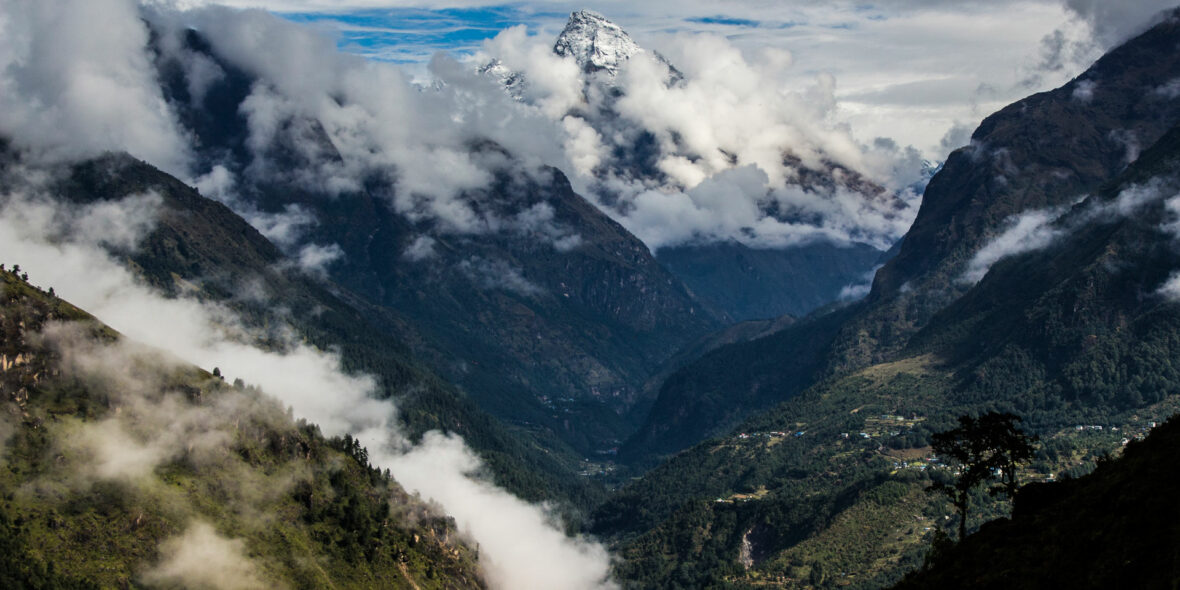
This morning we follow the main Everest trail briefly before turning up a path that leads into the forest and traverses around many ridges to the valley of the Kari Khola (river). We need to climb up over the Khari La pass (3080m), which is good as we avoid the new road below.
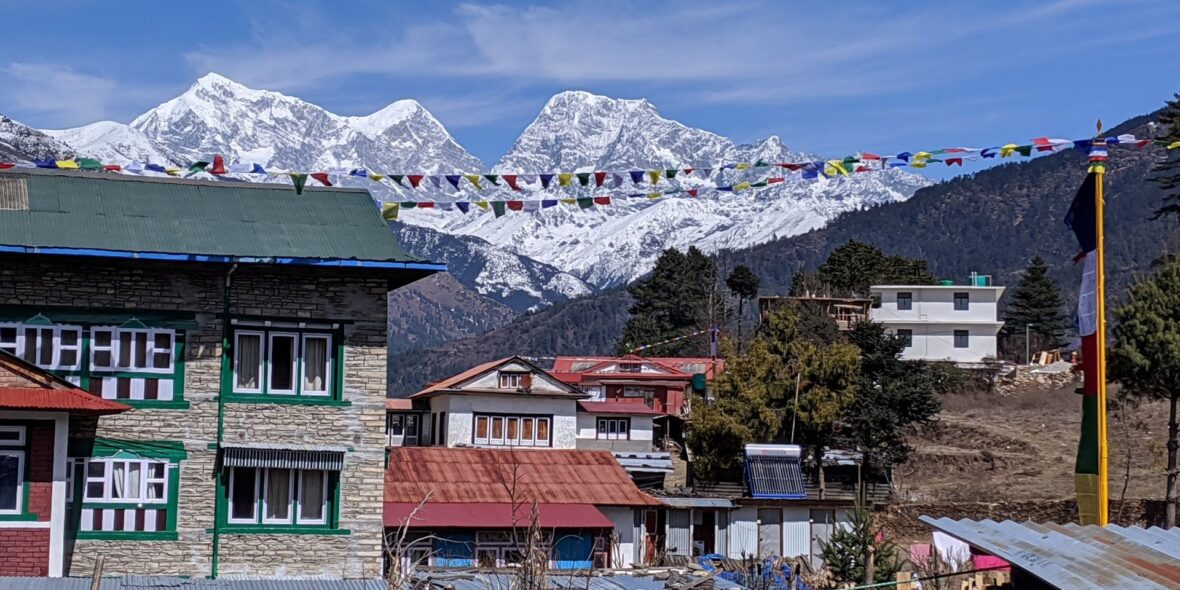
As we approach Panggom, set in the base of a small, bowl-like valley immediately below the Narkung La pass, we trek through forests of rhododendron, pines and oaks. Panggom is a very old settlement, little changed in nature except for the addition of some tea houses. It has a beautiful gompa (Buddhist monastery) overlooking the town and expansive views out over the valley to the peaks of Kungde, Karyolung and Numbur Himal.
The Gompa has prayers 5-6pm and 6-7am and visitors are welcome then, or at other times if the caretaker is available to open. As always, a donation in the marked box is appreciated.
Walking time: Approx 5 hours
Accommodation: Tea House
Meals included: Breakfast, Lunch, Dinner
Day 03: Trek from Panggom to Ramailo Danda [3275m]
In the morning if clear, we wake up to stunning views and can look down on the flights to Lukla. If we didn’t get to the Gompa yesterday, we can take the stairs up there for a visit. From the Gompa the trail continues on past a beautiful shrine to Green Tara/Dolma Buddha and we have a gradual climb up to the pass at 3100m.
Our trail down the other side switches between road and walking trail, past mani walls and Buddhist shrines until we come to a tea house in the saddle, at the top of Sibuje village. Here the trail forks, to our direct Mera Peak approach or the much less visited trail up to Paanch Pokhari via Najingdingma, which we can see across the valley.
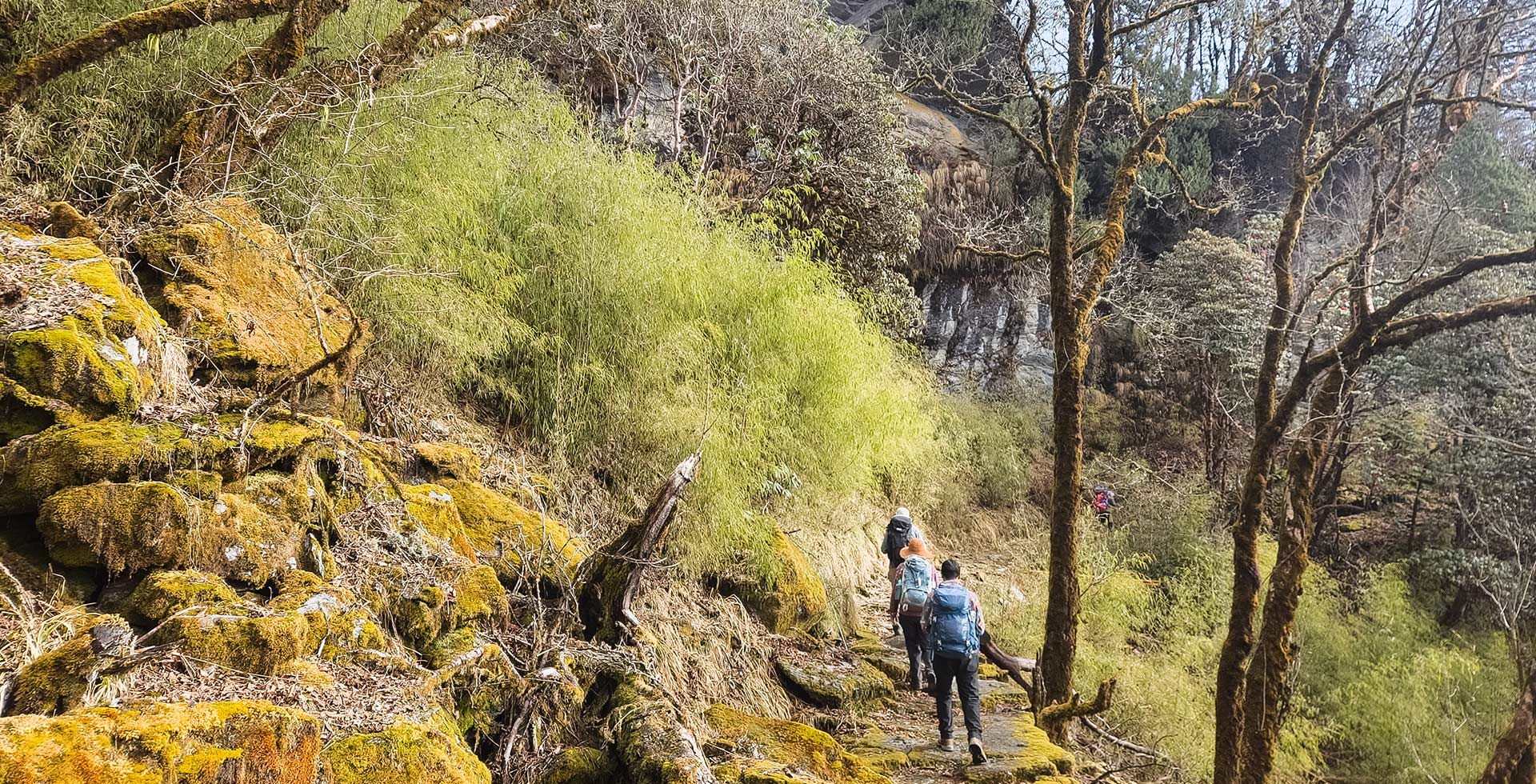
We climb to the Buddha Lodge tea house, which has stunning views out across the rugged Hinku Valley, really giving us a sense of how much ‘wilderness’ we have to experience in this little visited area. We continue up through magnificent Himalayan Cedar trees interspersed with bamboo, Simal and Lokta, to the tea houses at Ngingso Valley [2820m] for lunch. Refuel well at lunch as we have a steep climb from here up through forest to Ramailo Danda, on the edge of the Makalu-Barun National Park buffer zone.
Walking time: Approx 5-6 hours
Accommodation: Tea House
Meals included: Breakfast, Lunch, Dinner
Day 04: Trek from Ramailo Danda to Chhatre Khola [3130m]
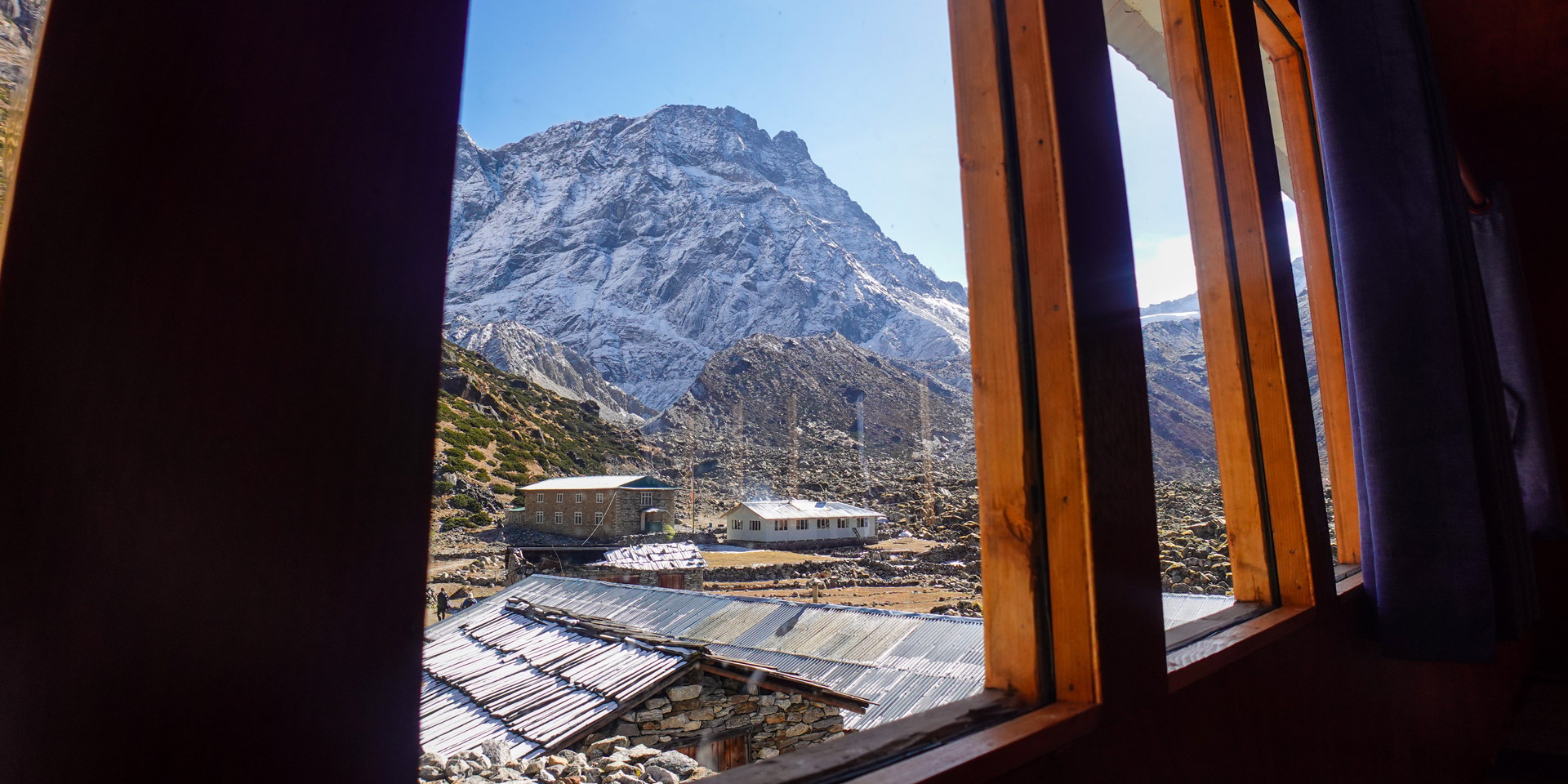
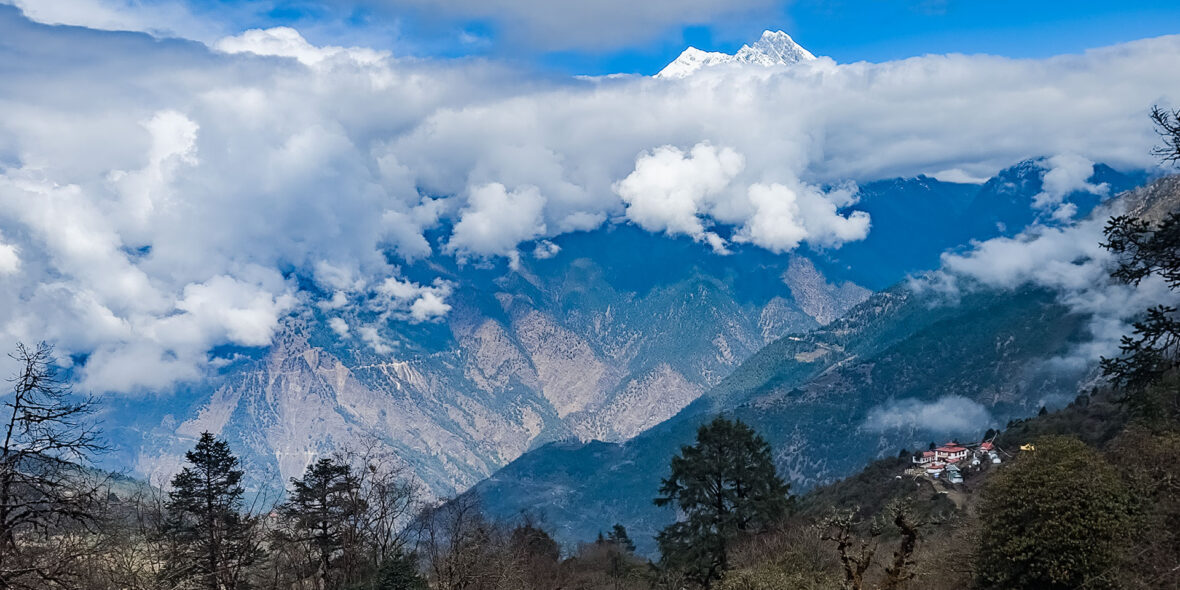
Wake up to stunning views of Mera Peak and the wild ridge heading up to Paanch Pokhari across the valley. To the south we can look down to Sibuje, Buddha Lodge and the Ngingso Valley tea houses and appreciate just how far we climbed yesterday afternoon!
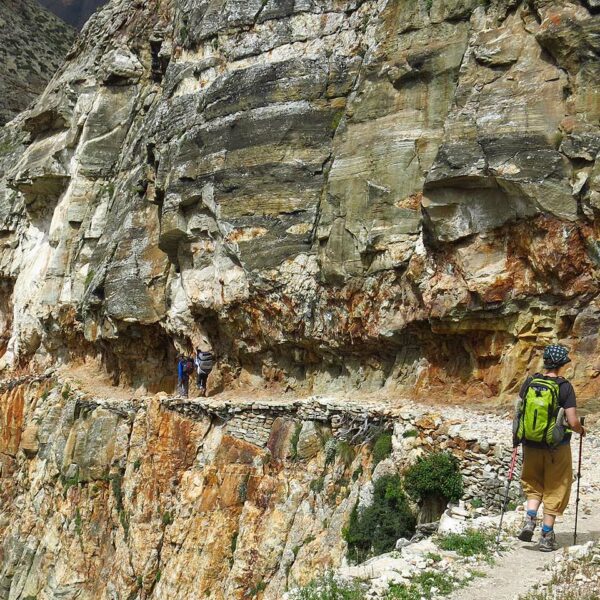
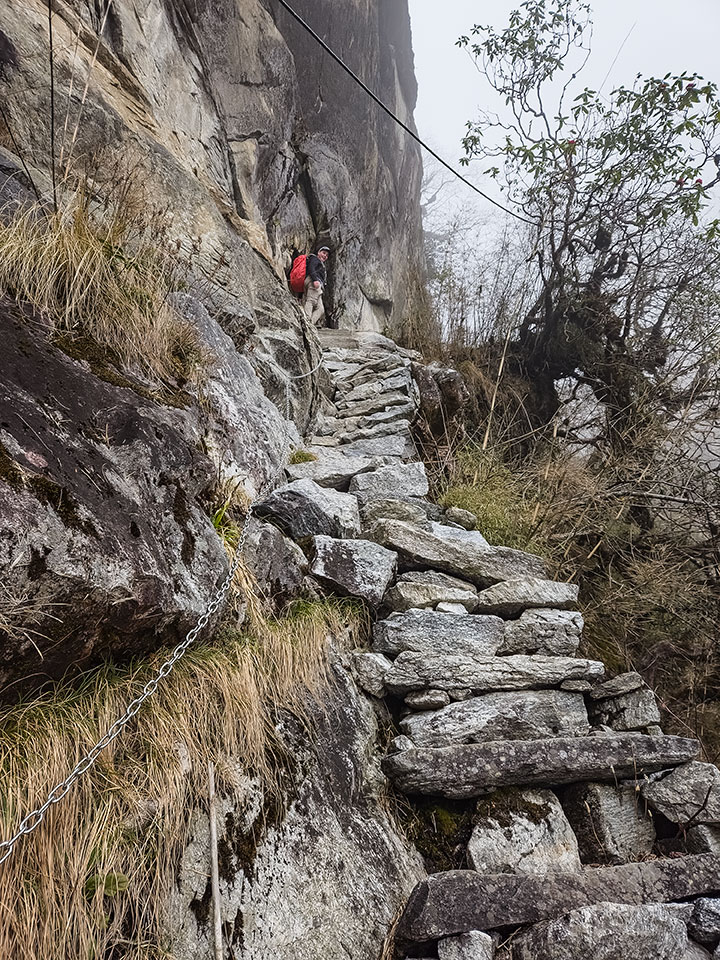
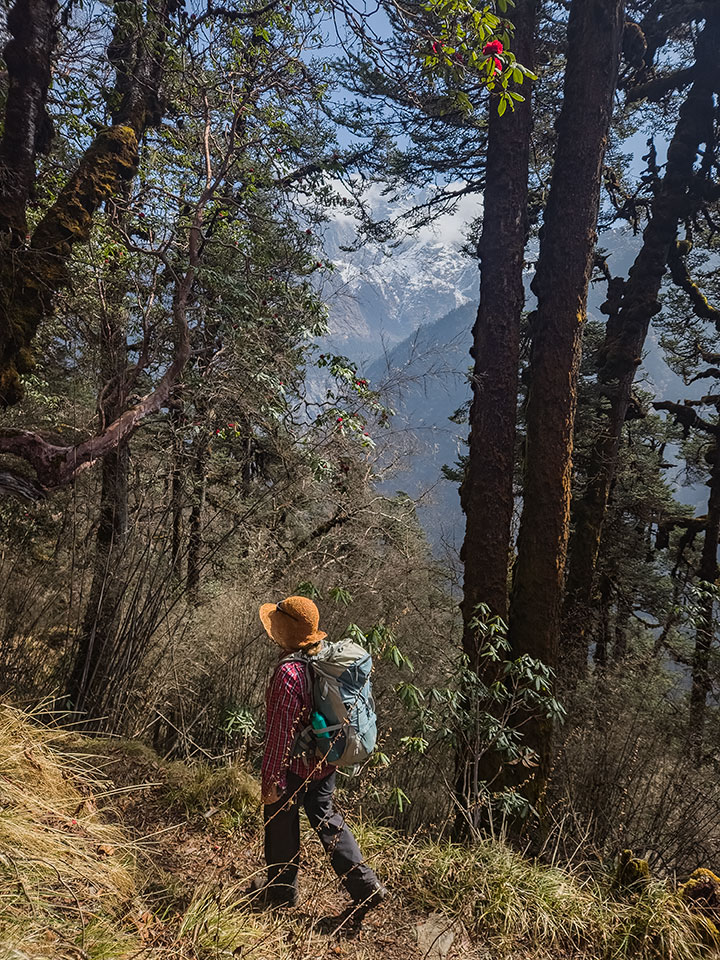
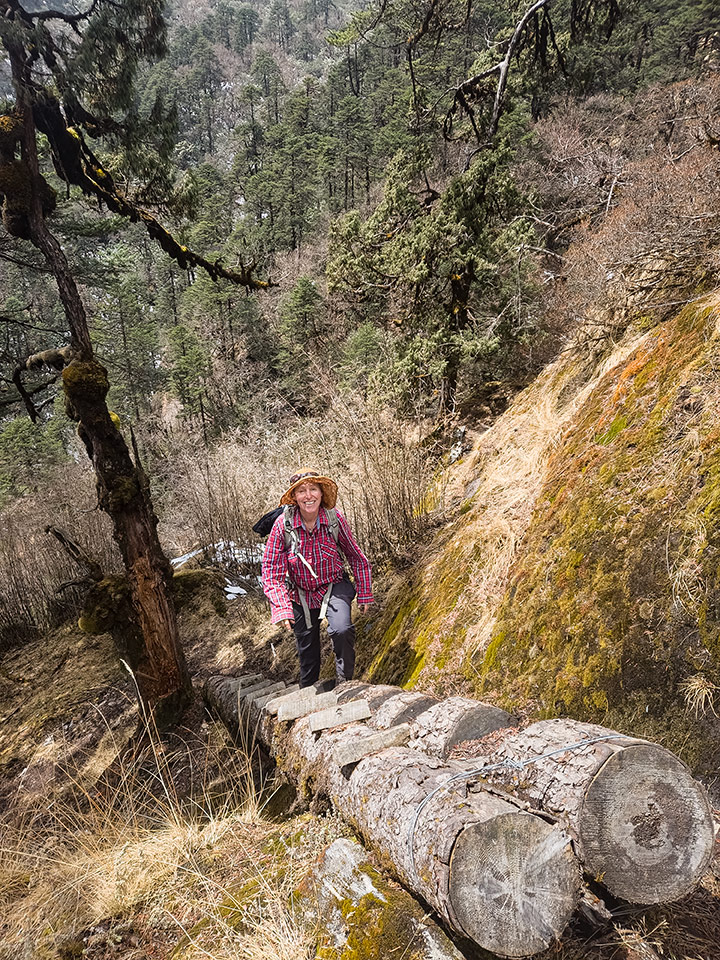
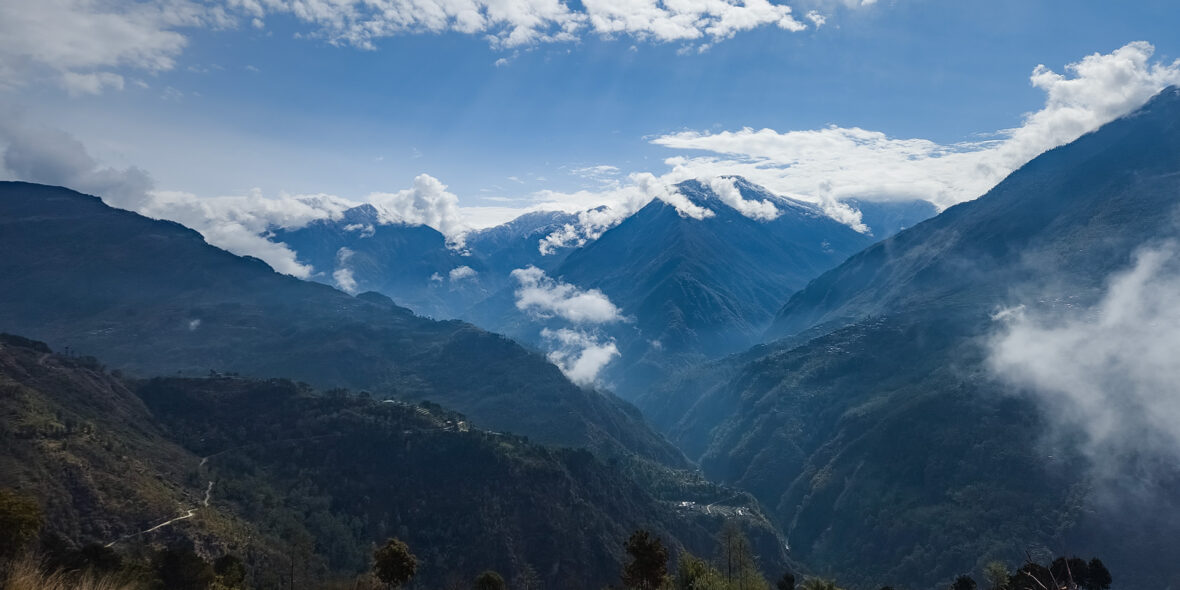
Our trail heads up the Hinku Khola valley through the buffer zone to the edge of the Makalu-Barun National Park. It’s a truly wild valley where we may see red panda, Himalayan tahr, martins and deer as well as many bird species. Today we traverse steep side valleys, skirting cliffs, descending stairs with the assistance of a chain to hold onto and plunging down to tributary streams, before climbing up to the ridgelines again. It’s a steep and rugged trail through stunningly beautiful old growth forests, with views up to Mera Peak along the way.
We stay at the Chhatrekhola Lodge, surrounded by stunning old growth Himalayan ‘Blue Pine’ (locally known as Gopre) and bamboo.
Walking time: Approx 4-5 hours
Accommodation: Tea House
Meals included: Breakfast, Lunch, Dinner
Day 05: Trek from Chhatre Khola to Kothe [3600m]
Today we enter the Makalu-Barun National Park as we take a long slow climb (not as wild and steep as previous days) up from the riverside, circling around towards the northern side of the ridgeline. We reach a big wooden resting place (chautara) on the ridge with stunning views up to Mera, Paanch Pokhari and Khola Kharka, where we will stay on our return journey.
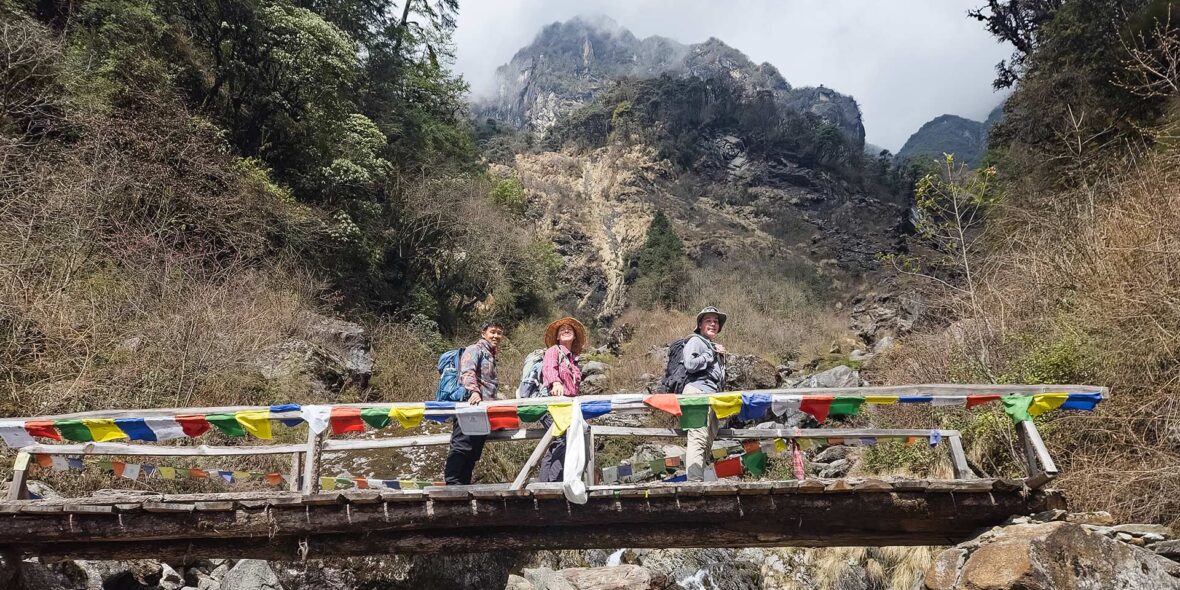
From here we have an undulating trail through shallow side valleys, nothing too steep and long like the previous days and in equally stunning forest. After a final gradual descent to a side stream, we cross a wooden bridge and have a very short climb to our lunch spot at Taktok, where we join the short-cut trail from Lukla.
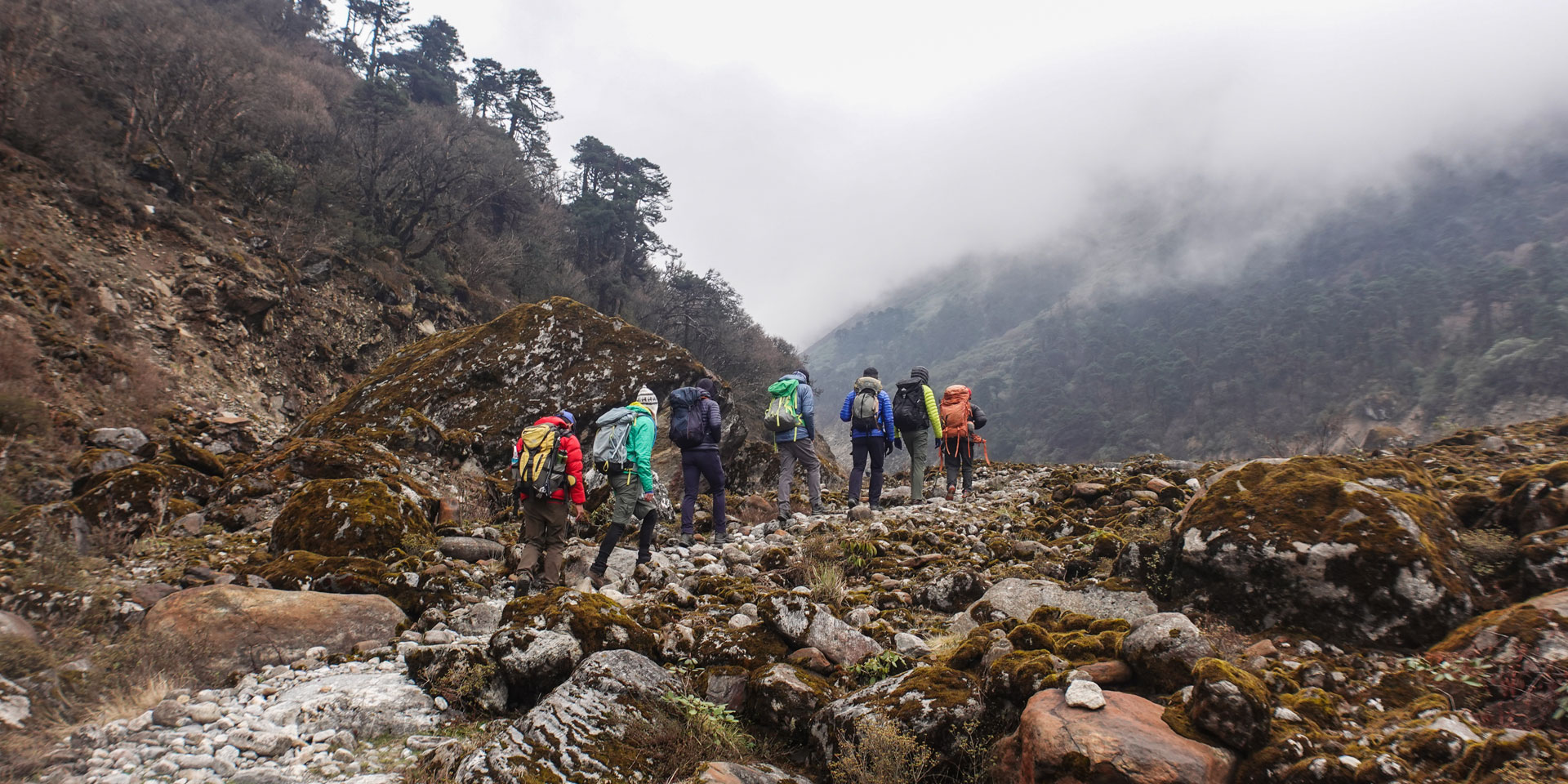
We start out again with a long, steep descent, which can be a bit hard on the knees straight after our lunch break. Take it easy and then enjoy the undulating trail that takes us to the Hinku Khola riverbed. We follow the river upstream, post huge gravel banks, clear turquoise pools and white rapids, enjoying the relative flatness of the trail. Before too long we turn uphill for the final big climb for the day, through stunning, open Himalayan ‘Blue Pine’ forest. We come over the final ridgeline and can see the tea house village of Kothe below us, with a direct view of Mera Peak up the narrow valley.
Walking time: Approx. 5 hours
Accommodation: Tea House
Meals included: Breakfast, Lunch, Dinner
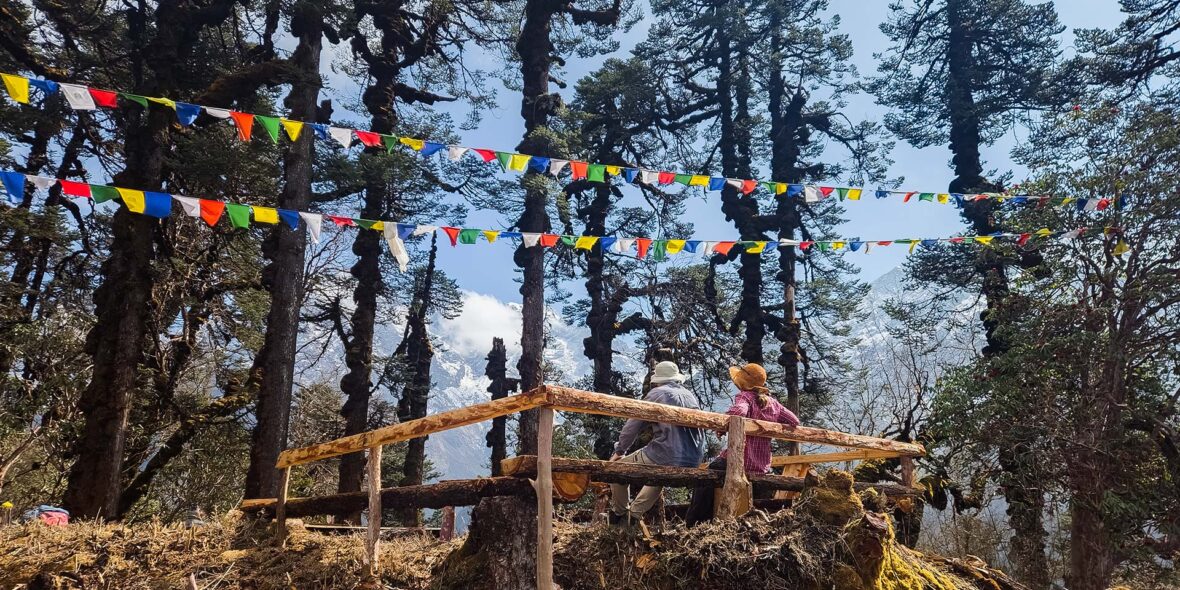
Day 06: Acclimatisation day at Kothe [3600m]
Today we will take a walk up high and come back down to sleep at the same altitude to aid acclimatisation. In the morning keep a lookout for yellow throated martins which are known to live around the village (they apparently like to raid the chicken coops).
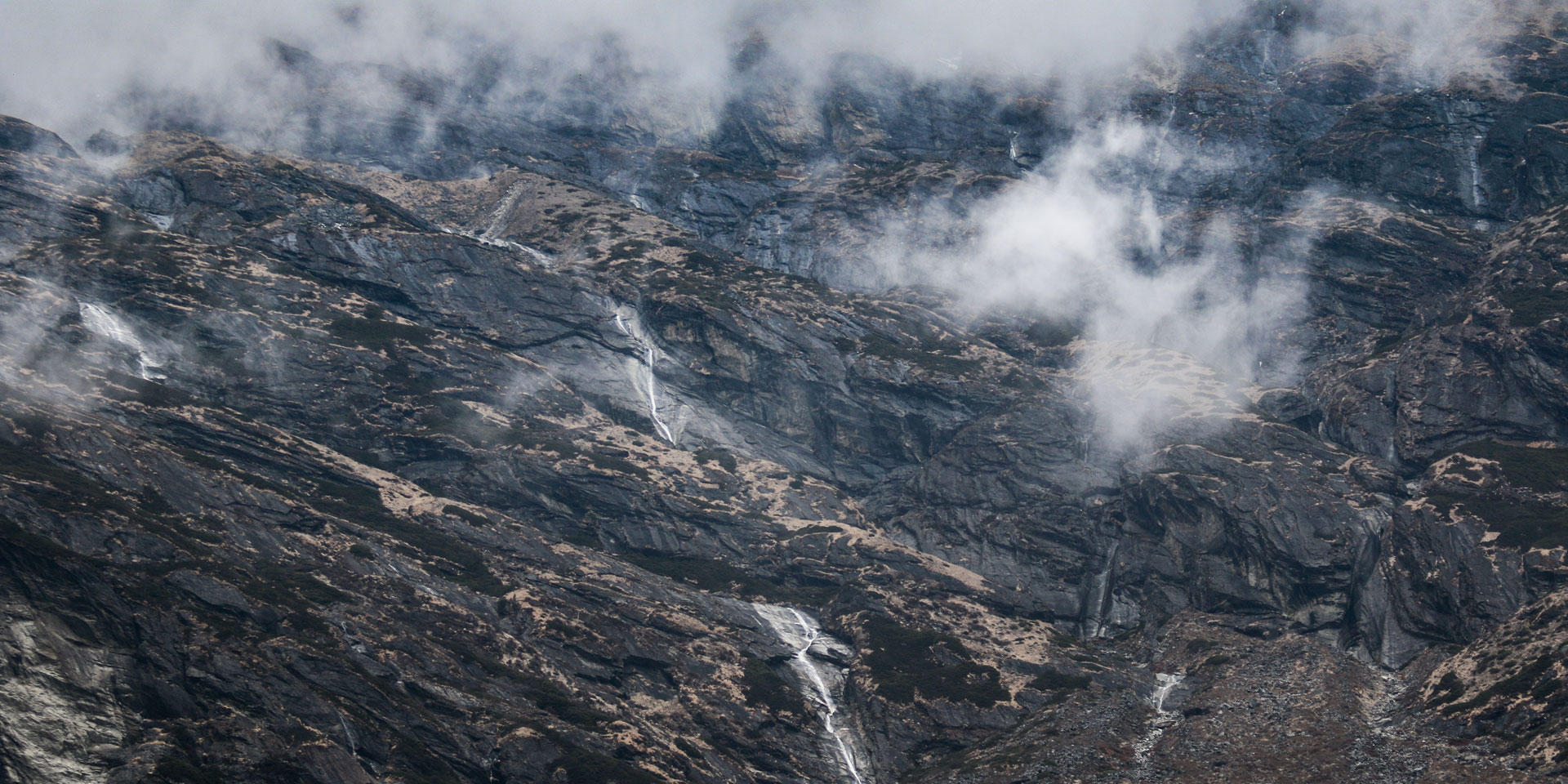
We start climbing up a small ridgeline alongside the stream behind the village. We climb steeply but can take our time, there is no rush. We have stunning forest layers to ascend through and the chance of seeing Himalayan Tahr as we gain altitude so keep a lookout for droppings/scats and take plenty of time to look around. The stream is beautiful and a few hundred metres above the village, where the trees start to thin out, there is a series of waterfalls with crystal clear rock pools in between. If you hike up to the base of some large rocks and the start of cliffs/crags above the tree line (this is where you are most likely to see Tahr), you will have reached about 3900m and can enjoy the view and head back down again to rest and let your body adjust.
Accommodation: Tea House
Meals included: Breakfast, Lunch, Dinner
Day 07: Trek from Kothe to Thangnak [4350m]
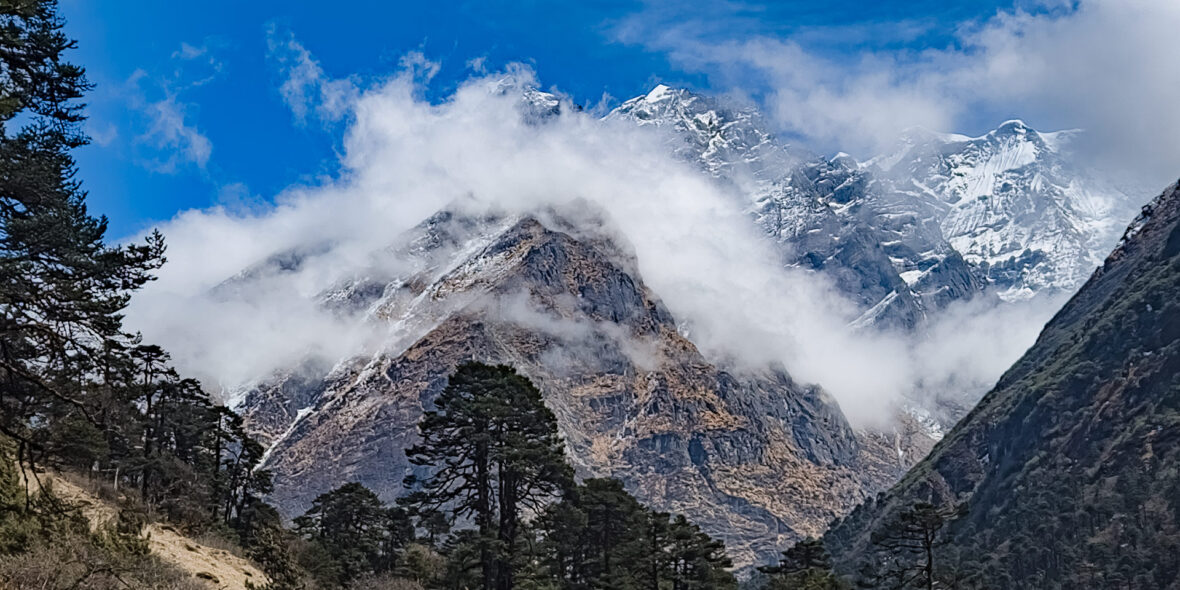
Today we have a change of pace as we follow the west bank of the Hinku river northwards. The river valley widens and we follow an easy and relatively flat trail, in contrast to the steep hillsides we’ve been traversing so far.
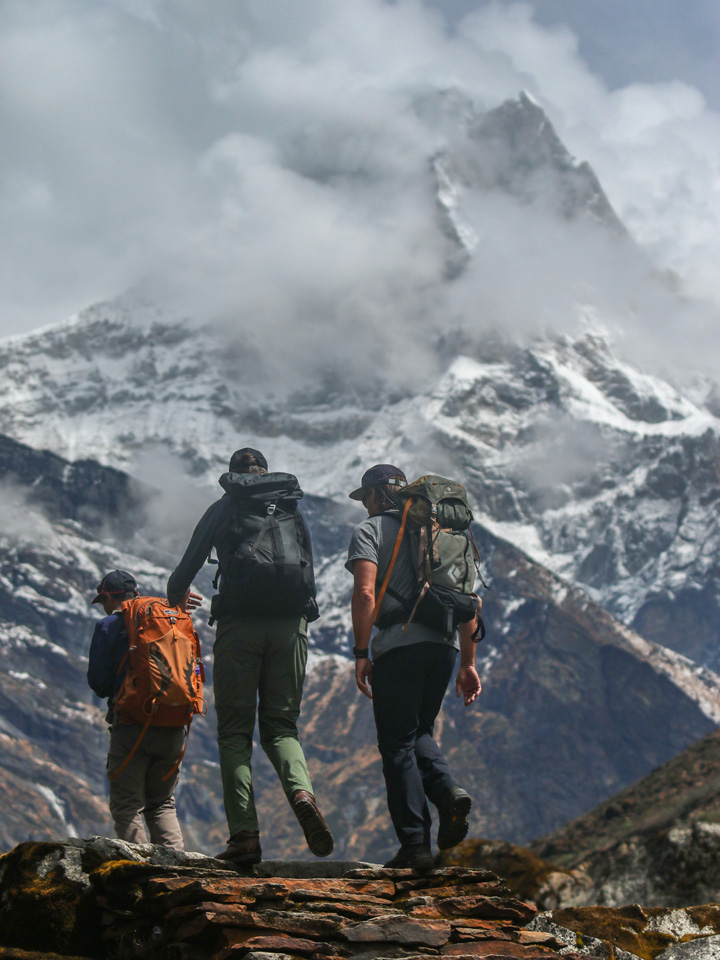
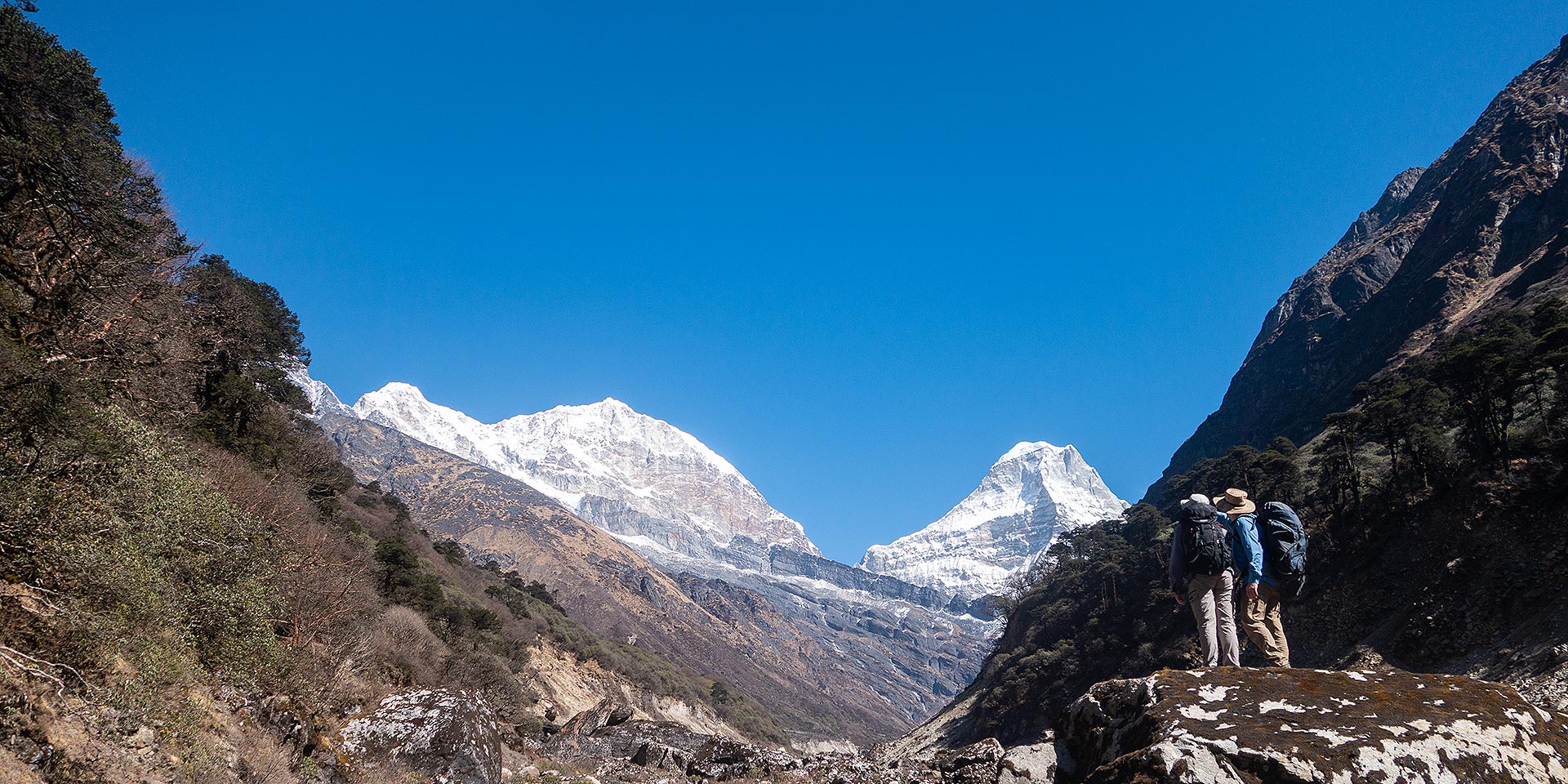
We start off with a clear view of Mera Peak up a side valley and the peaks of Kyashar and Tagnaktse up the Hinku khola (river) ahead of us. As we pass the valley that comes down from Dudh Pokhari, the view of Mera disappears, as do the trees. As we continue up the river the twin summits of Kusum Kanguru appear on the left.
There are no villages in the Upper Hinku, traditionally there were only small kharkas (open grassy areas) used for grazing goats, sheep and yaks. These days there are a few tea houses to help us out on our trek and we reach our tea/lunch stop after about 2 hours walking upriver.
After we leave the teahouses we have about an hour’s steady walk to a fascinating 200 year-old Gompa built beneath a massive boulder. From the Gompa it is another half hour’s walk over moraine to the old yak herders’ settlement of Thangnak, though nowadays it is more of a teahouse village. As we approach, we can see framed in the sharp V of the valley the imaginatively named Peak 41 and get a sense of the Mera La (pass) to the east.
We will spend two nights at Thangnak (4350m) for acclimatisation.
Walking time: Approx 4-5 hours
Accommodation: Tea House
Meals included: Breakfast, Lunch, Dinner
Day 08: Acclimatisation day at Thangnak
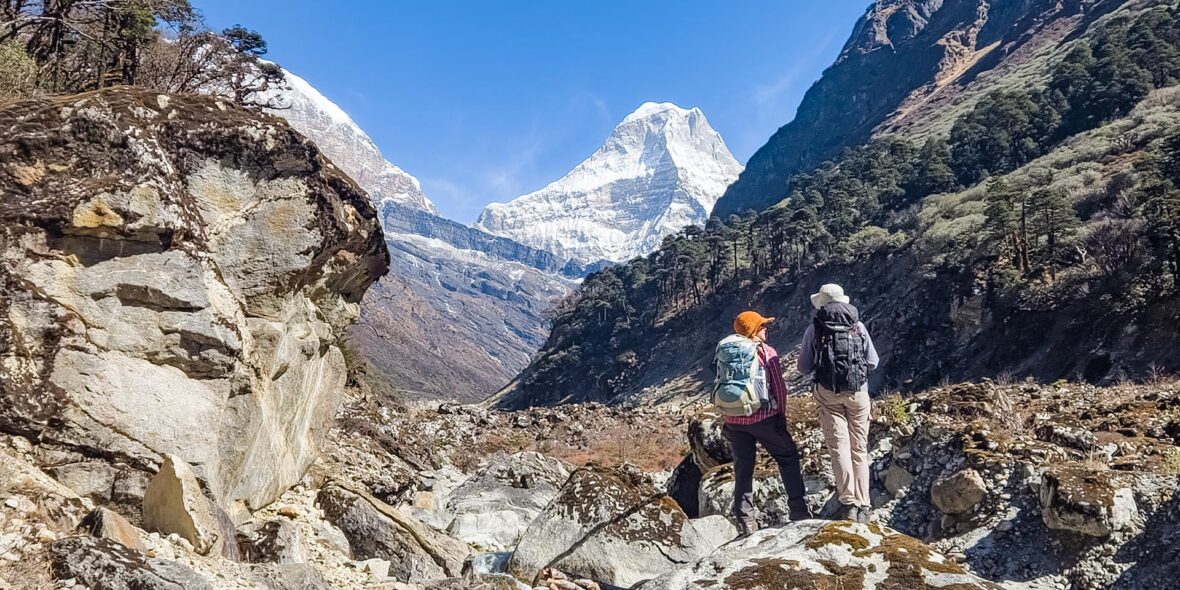
To aid our acclimatisation we spend two nights at Thangnak. In the morning we will organize a walk up the ridge behind Thangnak where there are superb views of Mera Peak, Kyashar and Kusum Kanguru. If we continue to top of the ridge, we will get to an altitude of 5,100m at Shertemba Go. This walk takes three and half hours up and one and a half back to Thangnak.
Accommodation: Tea House
Meals included: Breakfast, Lunch, Dinner
Day 09: Trek from Thangnak to Khare [5000m]
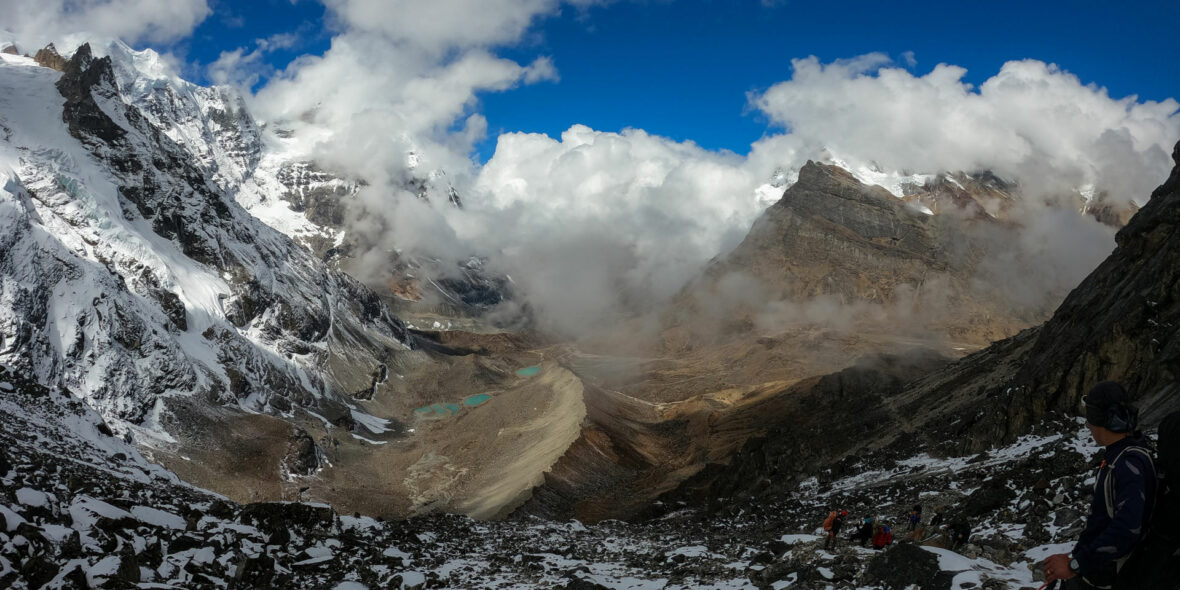
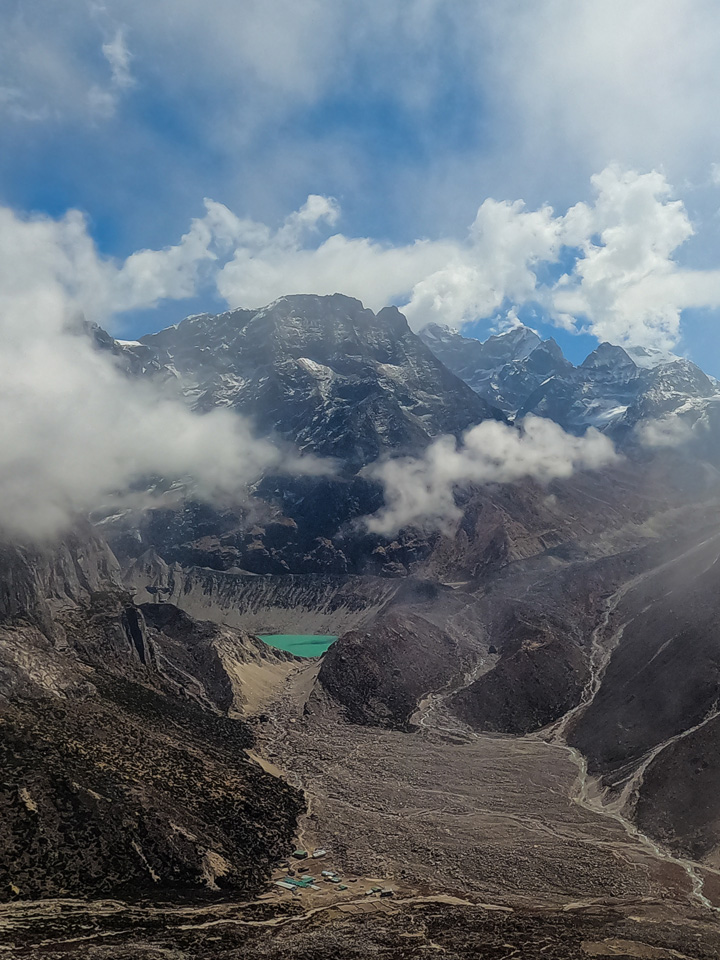
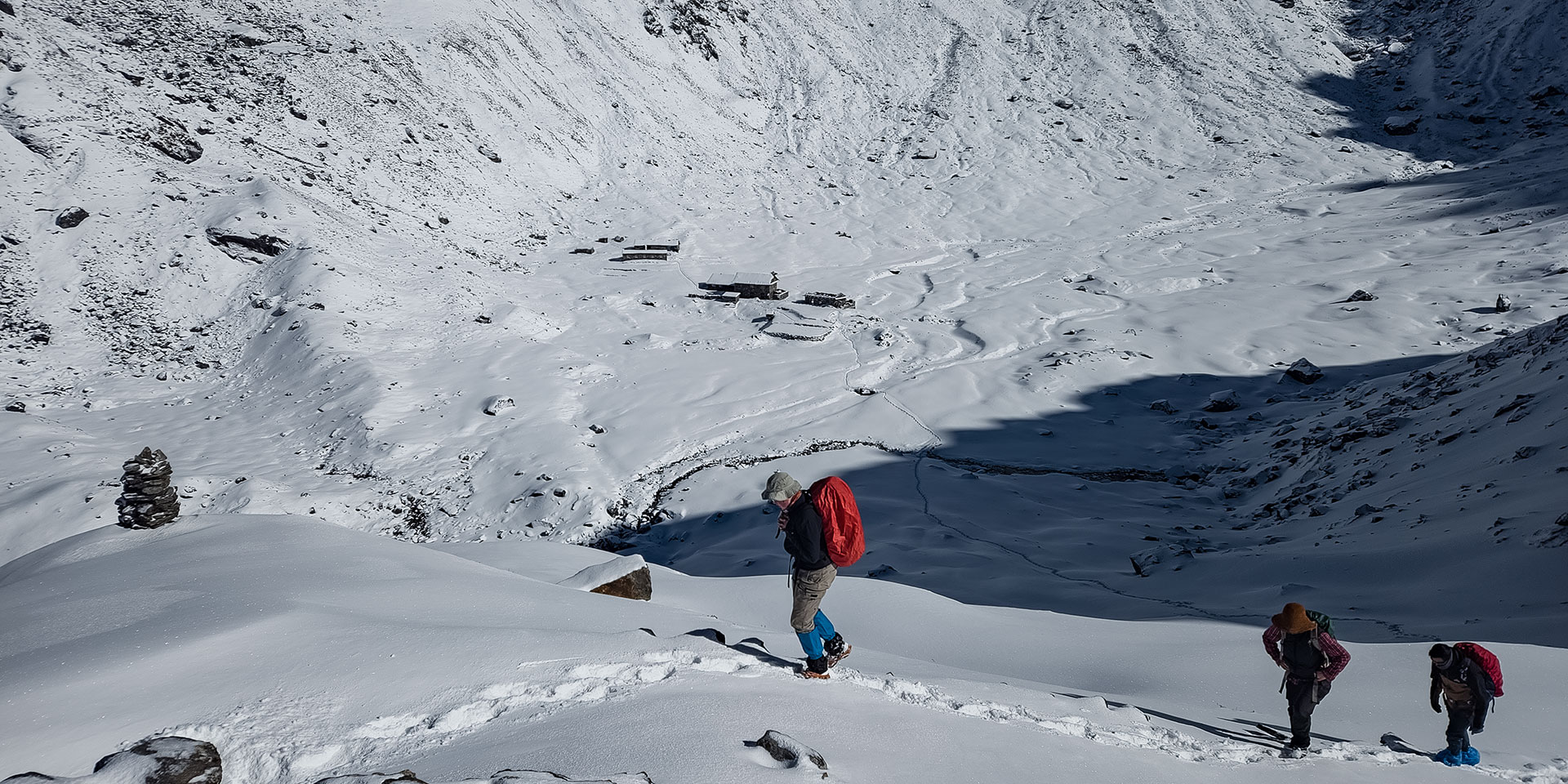
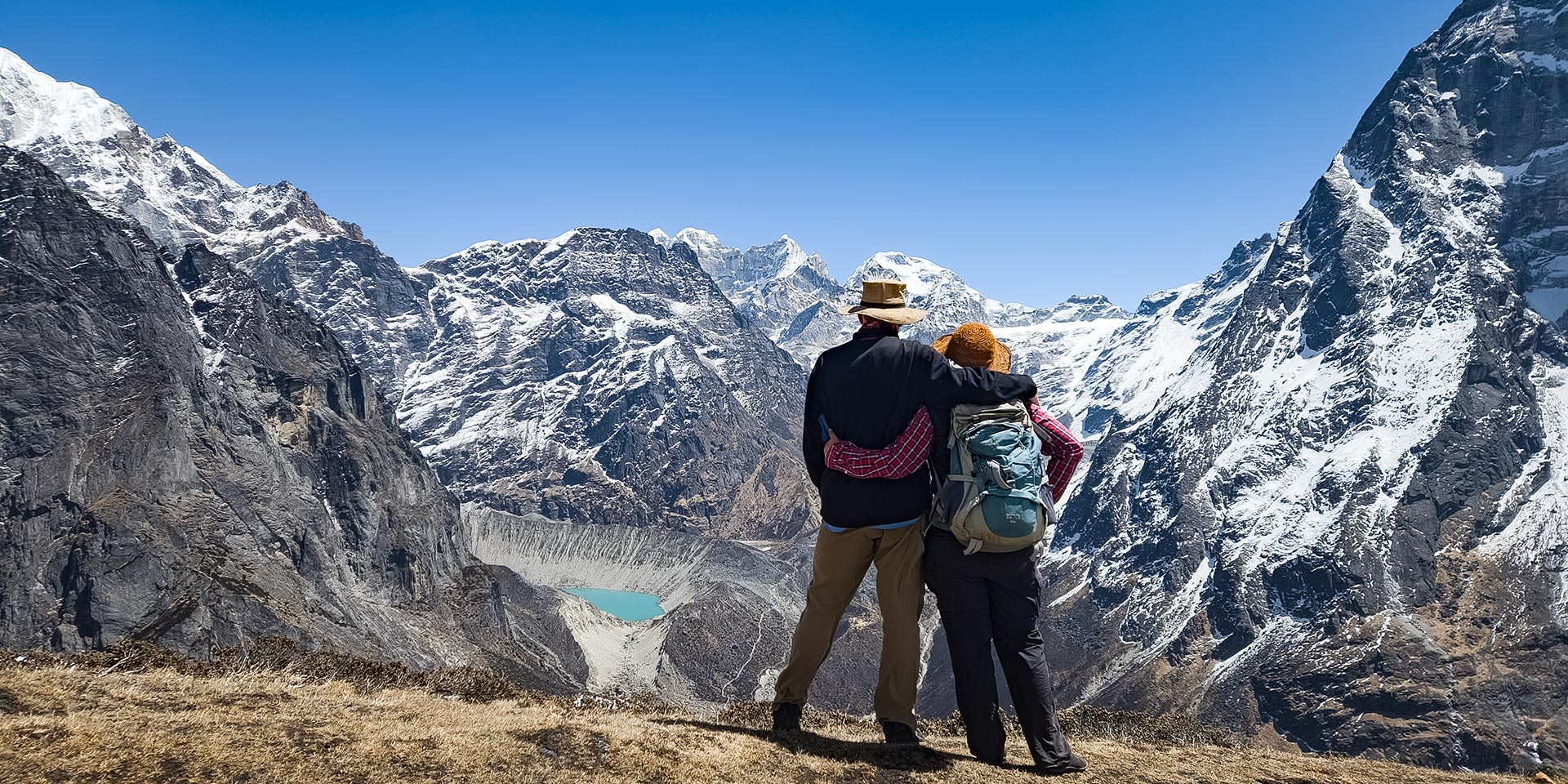
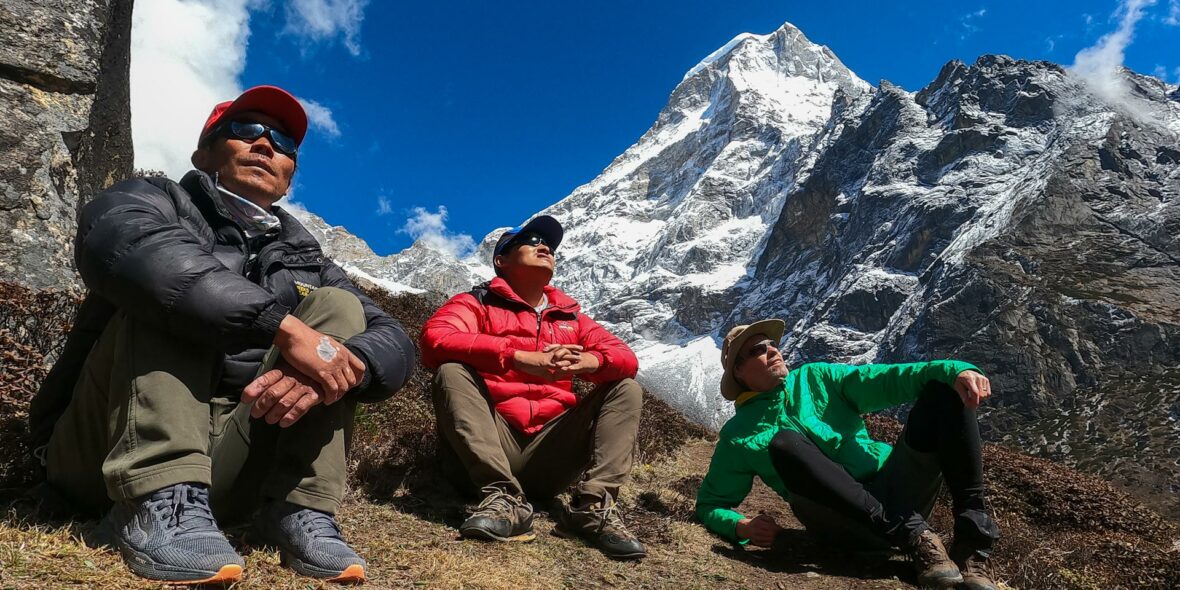
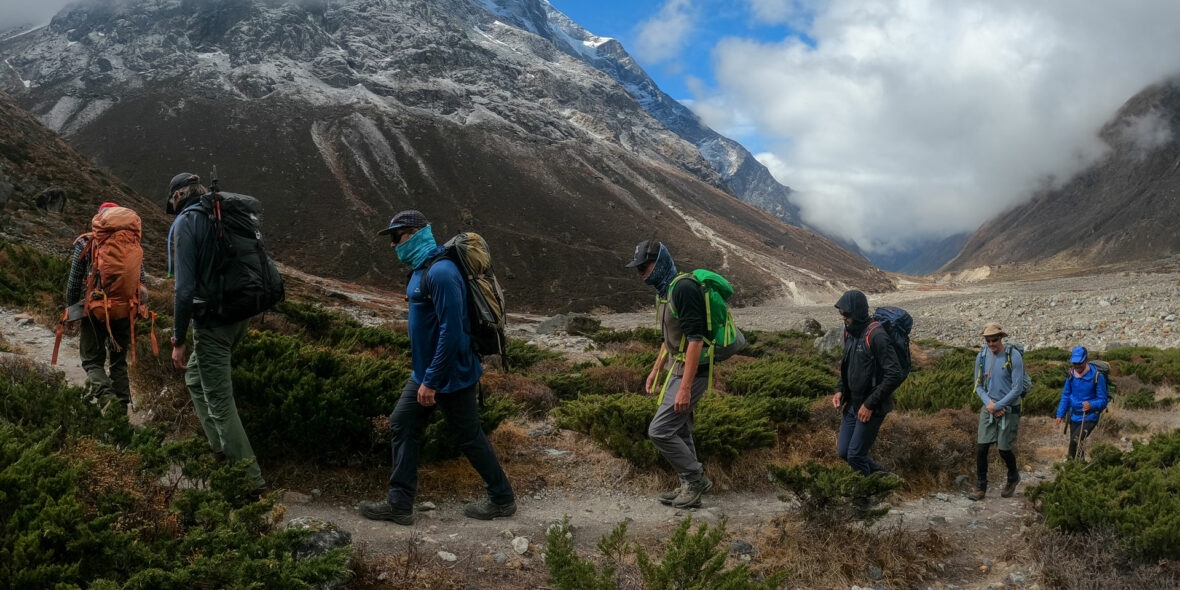
Heading up from Thangnak towards the Mera Basecamp at Khare, a good trail leads up and across the moraine which dams Charpatti Tal (a glacial lake also known as Sabai Tso). After about 30 minutes of climbing we reach a high point lined with cairns and can drop our packs to go off track a little bit and look out across the stunning turquoise lake with its backdrop of snowy peaks.
From here the trail descends slightly to cross a sandy bowl and then climbs gently but steadily alongside a khola or stream. We have seen the rare Mountain Weasel in this area, so keep a lookout for this small orange fluffball, or the even smaller white Pika that it hunts. As we continue the valley opens out into the large pasture of Dig Kharka, where we cross the khola on stepping stones and continue up to a small tea house where we can enjoy this immense view over a cup of tea.
We then climb for a further hour or so to Khare, the last teahouses and the logistical ‘basecamp’ for Mera Peak at an altitude of approximately 5000 metres at the bottom of the village.
Walking time: Approx 4-5 hours
Accommodation: Tea House
Meals included: Breakfast, Lunch, Dinner
Day 10: Trek from Khare to Kothe [3600m]
Today we retrace our route back to Kothe. It takes two hours to walk to Thangnak then a further two hours to lunch then afterwards it takes a further than two and half hours to Kothe.
Walking time: Approx. 5-6 hours
Accommodation: Tea House
Meals included: Breakfast, Lunch, Dinner
Day 11: Trek from Khote to Khola Kharka [4200m]
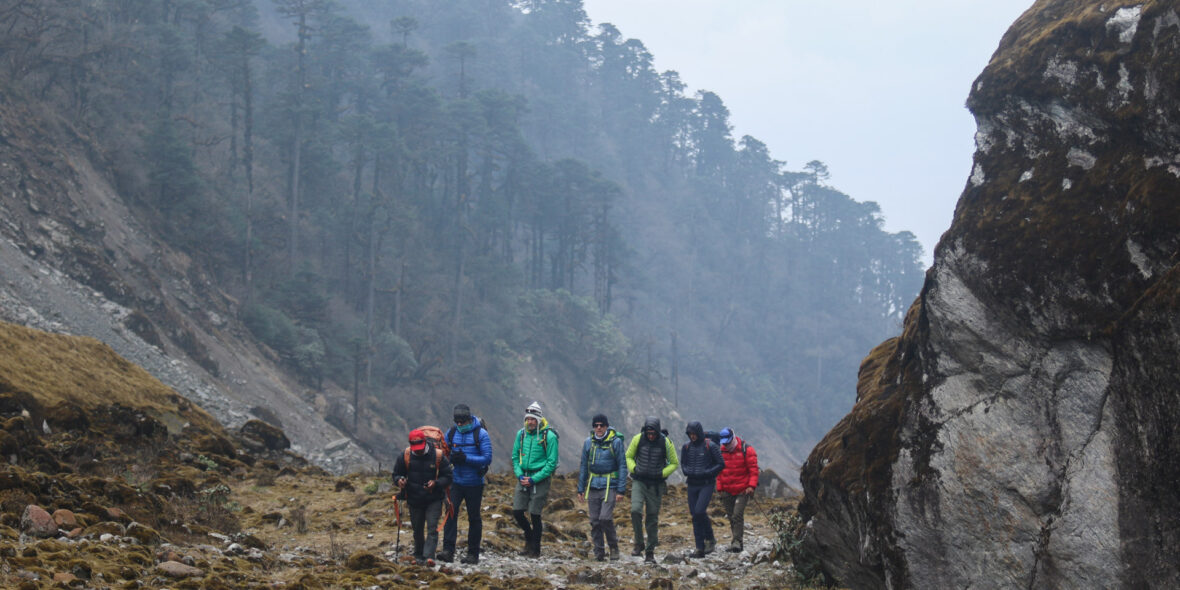
This morning we cross the Hinku Khola and follow the trail downstream initially, before we turn and climb through the stunning forest to a small tea house, predominantly catering to the muleteers and yak train herders who bring goods in along this ‘easy’ trail.
After a break for tea and some noodle soup, we continue up through the forest to a side ‘stream’ over a very interestingly built rock and stone bridge before the trail really starts to climb. We make our way up on stone steps, somewhat battered by the mule trains in parts, so watch your step on loose rocks. We ascend through various stages of forest, from the Gopre/Blue Pine and Rhododendrons, through Junipers and finally into the dwarf alpine rhododendrons known as Sunpati.
Heading southeast, our route contours (always climbing though) around many ridges, high above the eastern side of the Hinku river valley with dramatic views back towards Panggom and further north up the valley. We continue to climb until we overlook the two main Paanch Pokhari lakes and then have a sharp descent into Khola Karka, a tiny settlement of two teahouses servicing travellers on this high remote route.
Walking time: Approx. 6-7 hours
Accommodation: Tea House
Meals included: Breakfast, Lunch, Dinner
Day 12: Trek from Khola Kharka to Cholem Kharka [3600m]
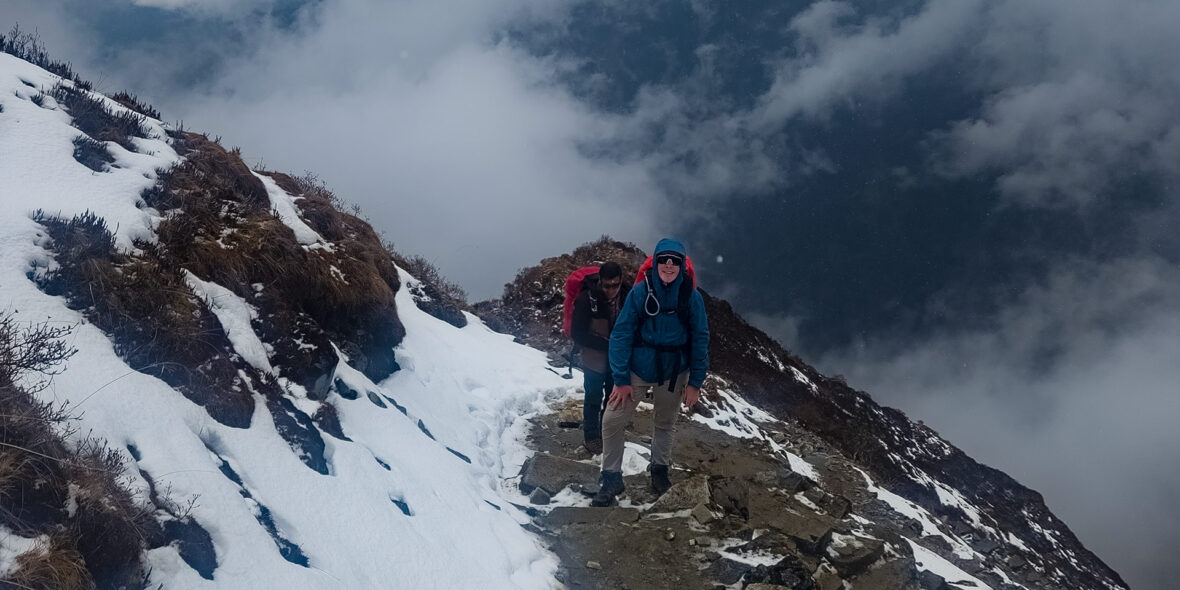
This morning we cross a small stream which plunges away to the Hinku River far, far below and climb up to the main lakes of Panch Pokhari, known as the Mother and Daughter. The Panch Pokhari lakes are sacred to both Hindu and Buddhist peoples. Each summer Hindu pilgrims visit for a large religious festival and you can see many tridents in this area, which symbolise the Hindu God, Lord Shiva. You can also see many Buddhist prayer flags, indicating the sacredness of the lakes to Buddhist peoples as well.
From here we continue to climb to a Mani wall at a pass at 4,450m, where we leave the Makalu-Barun National Park. From here we descend to a small and very simple tea house/shelter and start to climb again to the Huhure Pass at an altitude of 4,200m. At the top of the pass there are superb views of Mount Kanchenjunga, the third highest mountain in the world. There are also frighteningly stark ridgelines and sheer mountainsides falling away to the Hinku Khola, it’s a wild place!
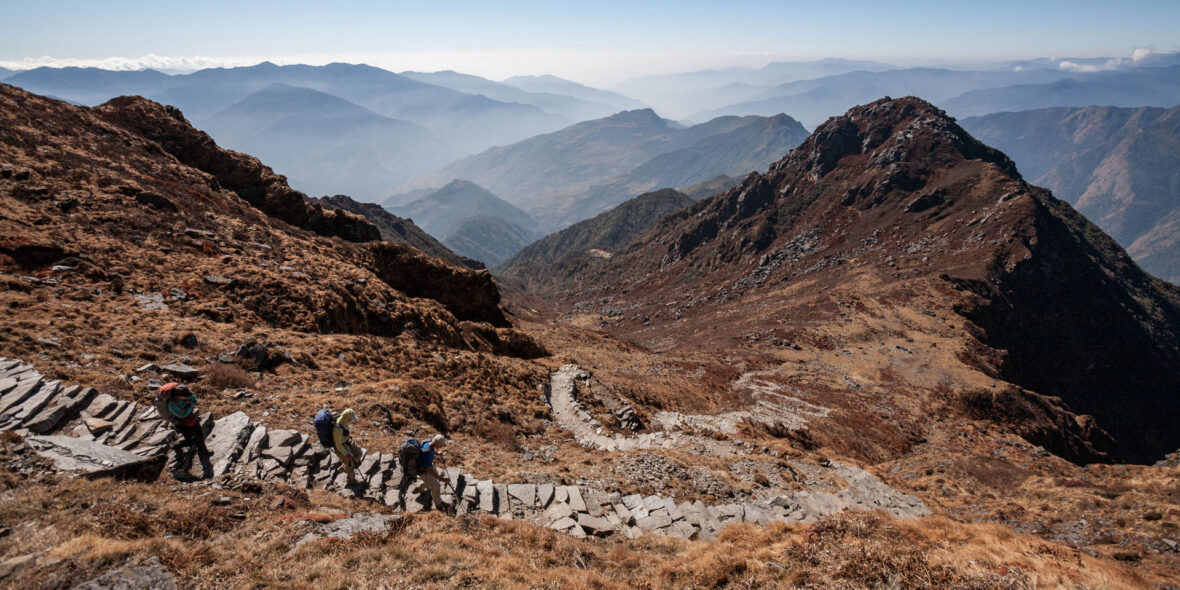
We descend on a steep but thankfully winding trail, so the slope is not so hard on our knees. We may pass yaks (or more likely the hybrid dzopkya) carrying goods to the Hinku river valley, so be sure to stand well to the side of the trail as they pass. We descend back into small rhododendrons and juniper and finally small conifers as we reach Cholem Kharka where we stay in a small tea house run by villagers from Bung village, far below us.
Walking time: Approx. 4-5 hours
Accommodation: Tea House
Meals included: Breakfast, Lunch, Dinner
Day 13: Trek from Cholem Kharka to Kirauli [2390m]
From Cholem we have a lovely walk on a relatively easy trail, compared with previous days, as we re-enter the forest zone and delight in the warmth and the smell of flowers, such as rhododendron and lokta. There are beautiful views looking out to the hills East of the Honku Khosi valley, up towards the sacred peak of Siraulchuli /Silichong and Salpa Bhanjang on the old trade route to Tumlingtar.
We hike about 1.5 hours down to the small settlement of Chara Khor, where we can stop and enjoy a cup of tea and seeing life in the fields after so many days in the forest and alpine areas. From here we have an easy undulating trail through forest, open kharkas (grazing areas) and down into the village of Kirauli where we stay at a large lodge by a beautiful stupa, with views back up to Huhure La, far above us.
Walking time: Approx. 3-4 hours
Accommodation: None
Meals included: Breakfast, Lunch, Dinner

Day 14: Drive from Kiraule to Phaplu
This morning, we are not in a rush. After a lazy breakfast your jeep will arrive and we load up for the 5 – 6 hour drive to Phaplu, of course depending on road conditions. The scenery along the way is lovely, taking you up and down hills and into bustling Phaplu. You’ll check into your comfortable guest house and the rest of the day is yours to relax. Do ask about the sauna around the corner, a great option to warm up on chilly days!
**Do ask about alternate options for extending your trip from here, for a short trek you can visit Pikey Peak or if you are into mountain biking, Phaplu has an amazing network of technical mountain bike trails.
Driving time: Approx: 5-6 hours
Accommodation: Kyirmu Guest house
Meals included: Breakfast, Lunch, Dinner
Day 15: Drive from Phaplu to Kathmandu
Today we bid farewell to the mountains and board our vehicle for the drive back into the Kathmandu Valley. In Kathmandu we take you to your hotel and the evening is yours to relax after a long drive.
Driving time: Approx 10 hours (depending on road conditions)
Meals included: Breakfast, Lunch
Extra day 1: Explore Khare, option to practice ice climbing and/or trek to Mera La
There are several excellent options if you would like to spend a day or two based in Khare, building some skills or simply exploring more!
For those who would like to practice skills needed for glacial travel we can organize a session on the glacier above Khare and/or hike to Mera La, which requires the use of ice gear as we walk across the glacier which we could see on our long climb up to Khare.
Alternatively, we can go for a day walk and explore the area to the North, towards Kangtega and return to admire the stunning views from the comfort of the tea house. This could be done instead of ice climbing, or can be added on as Extra Day 2.
There is of course the option to climb Mera Peak if you feel the call to do so. Your itinerary has you acclimatised and ready, so if you feel the urge and have budgeted the time and money ‘just in case’ then please discuss with your guide who can arrange this with the office.
Accommodation: Tea House
Meals included: Breakfast, Lunch, Dinner